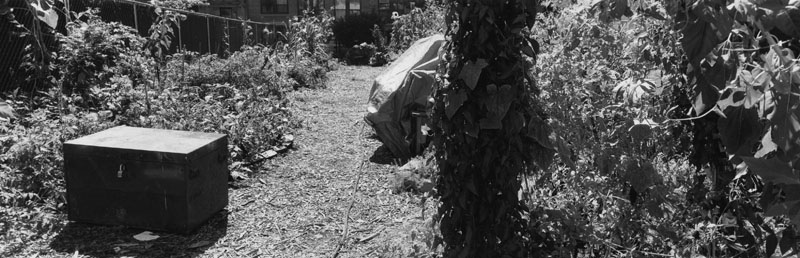
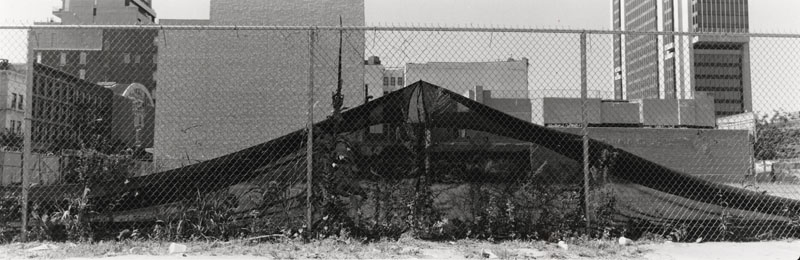
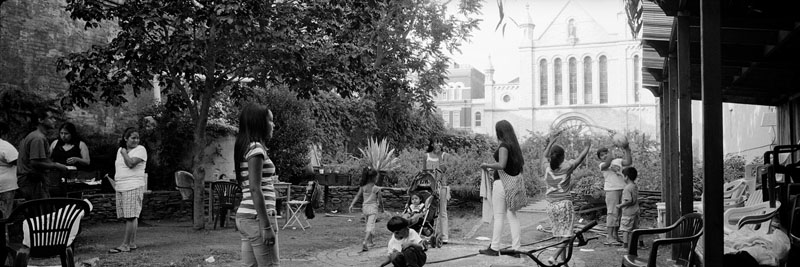
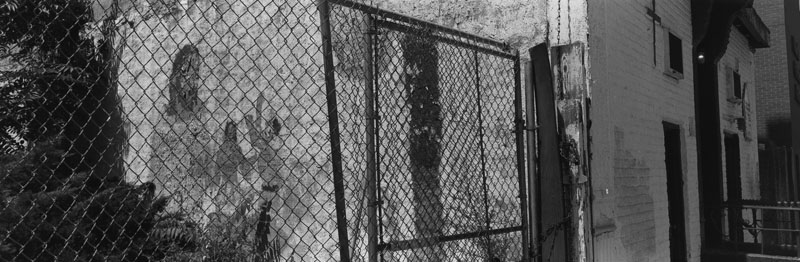
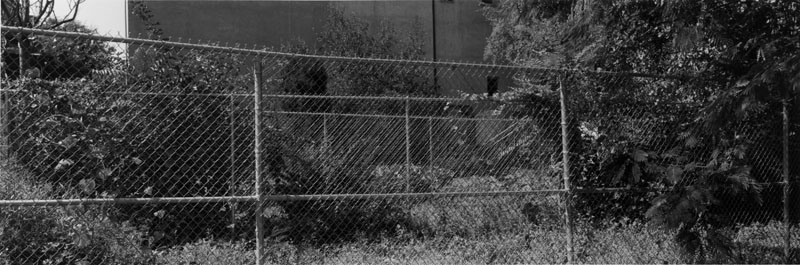
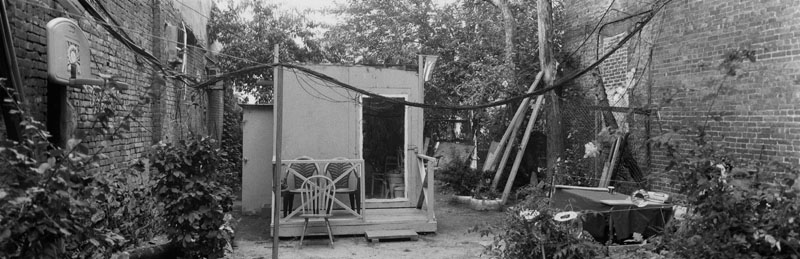
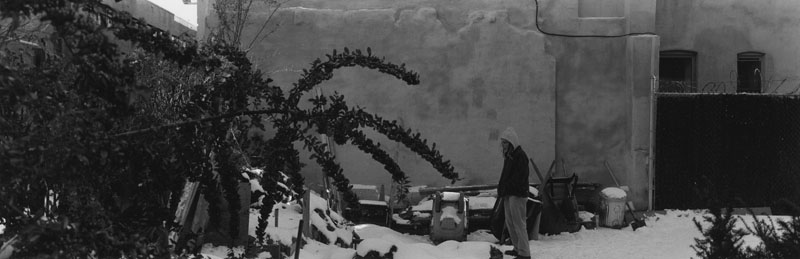
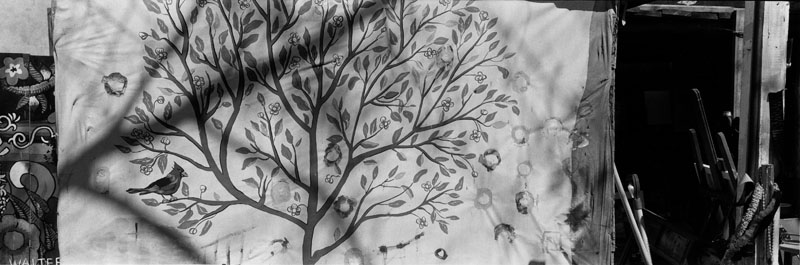
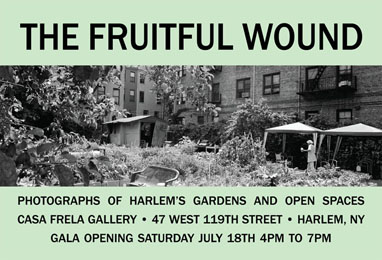
Photographing community gardens with the panoramic format explores an environment with a complex set of psychological, social, and physical compromises and conflicts.
The community gardening movement took root in the late 1970s when The City, and many private owners, made the decision to abandon large amounts of land that they had no interest in maintaining. Faced with these neglected plots - often sites of drug use, dumping, or worse – locals took over the areas and cultivated them. Where urban blight might have flourished, gardens were planted.
With the renewed interest in Harlem real estate, some of the gardens have been purchased and preserved by non-profits or the New York City Parks Department, while many others have been built over or reclaimed by their owners.
Shaped by the urban setting and the participants' histories and resources, each garden is a living allegory of a life's fragility and potential fruitfulness.